
Midi Skirts After 50: How to Wear Them and Look Effortlessly Elegant
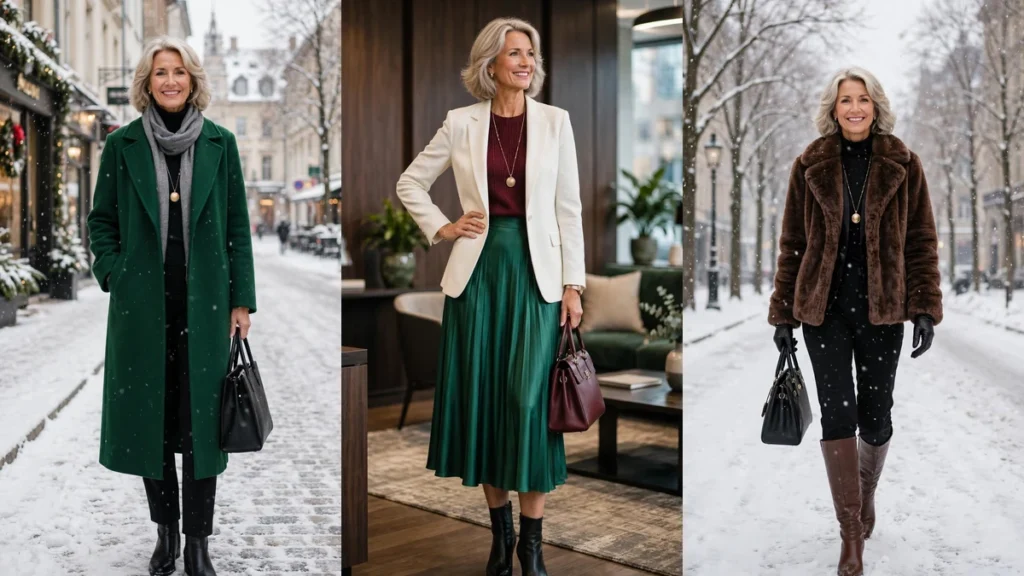
A midi skirt should never make you feel shorter, wider, or more formal than you intended.
That’s usually the frustration. On the hanger the skirt looks graceful — but once it’s on, the length, shoes, waistline, and top all start competing with each other.
The good news: when proportions are handled well, midi skirts create some of the most elegant outfits for women over 50. No wardrobe overhaul or closet full of new pieces required.
You only need to know where the skirt should sit, which shape flatters you most, and how to balance it with pieces you already wear.
Why Midi Skirts Feel Tricky After 50
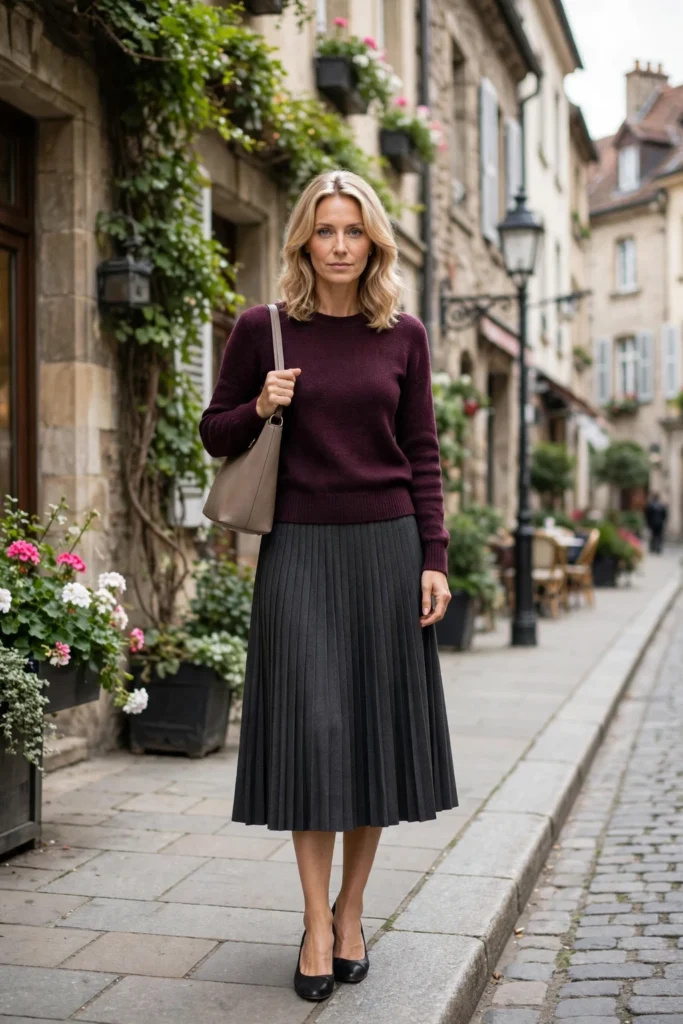
Midi skirts are beautiful — but they demand more styling thought than jeans or straight trousers.
The challenge is usually that in-between length. A skirt ending at the widest part of the calf can visually shorten the leg; a waistline sitting too low can make the whole outfit feel heavy; a top that’s too long can hide the very shape that makes the skirt work.
None of this means midi skirts are hard to wear. It just means they reward a little more intention.
Fit note
The most flattering midi usually shows some shape at the waist or hip, then floats away from the body. That touch of structure keeps the outfit polished, never bulky.
For everyday dressing, treat the midi skirt as a smart-casual piece: relaxed with knitwear and flats, elegant with a blouse and slingbacks, modern with a simple tee and cropped jacket.
The One Proportion Rule That Changes Everything
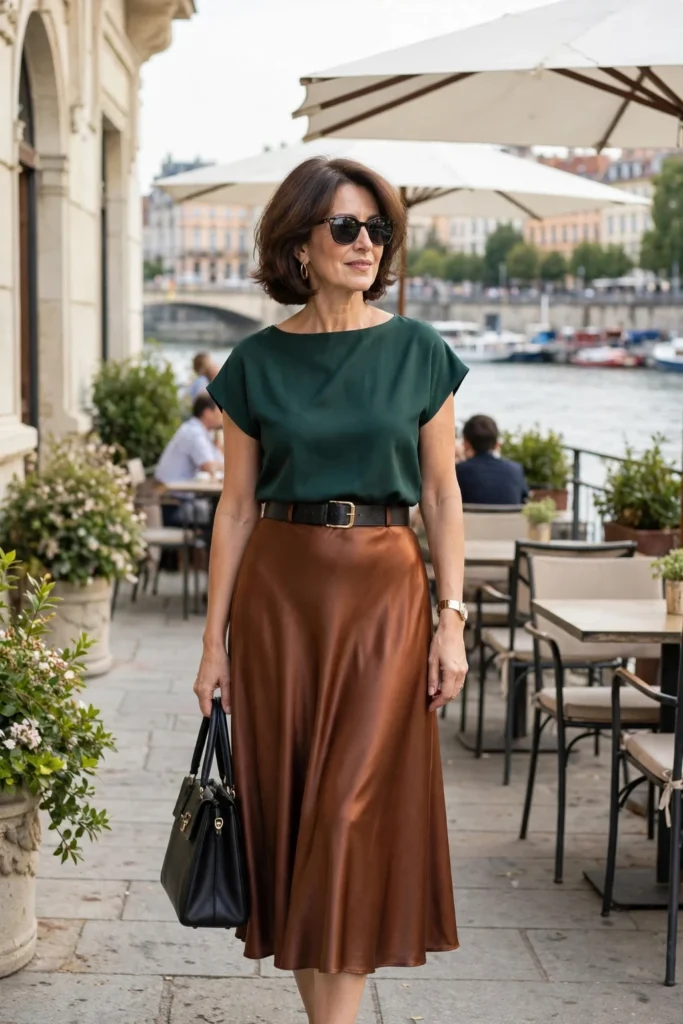
The golden rule is simple: define the waist, then keep everything below it long and clean.
A midi skirt already adds fabric below the waist. If the top is long, loose, and heavy too, the outfit loses its shape fast. A shorter top, a tucked knit, or a defined waistband gives the eye a clear starting point.
That’s why the same skirt can look like two different garments with two different tops. A long tunic can make it feel dated; a soft crewneck ending near the waistband makes it feel current and elegant.
You don’t need a tight top — just one that gives the skirt a boundary.
Try these easy proportion fixes:
- Tuck just the front of a soft blouse if a full tuck feels too prim.
- Pick a sweater that ends at the high hip, not mid-thigh.
- Add a slim belt when the waistband looks plain or unfinished.
- Wear a cropped jacket that ends above the skirt’s widest point.
The goal isn’t to show off your figure — it’s to give the outfit a shape.
Pick the Right Midi Fit and Fabric
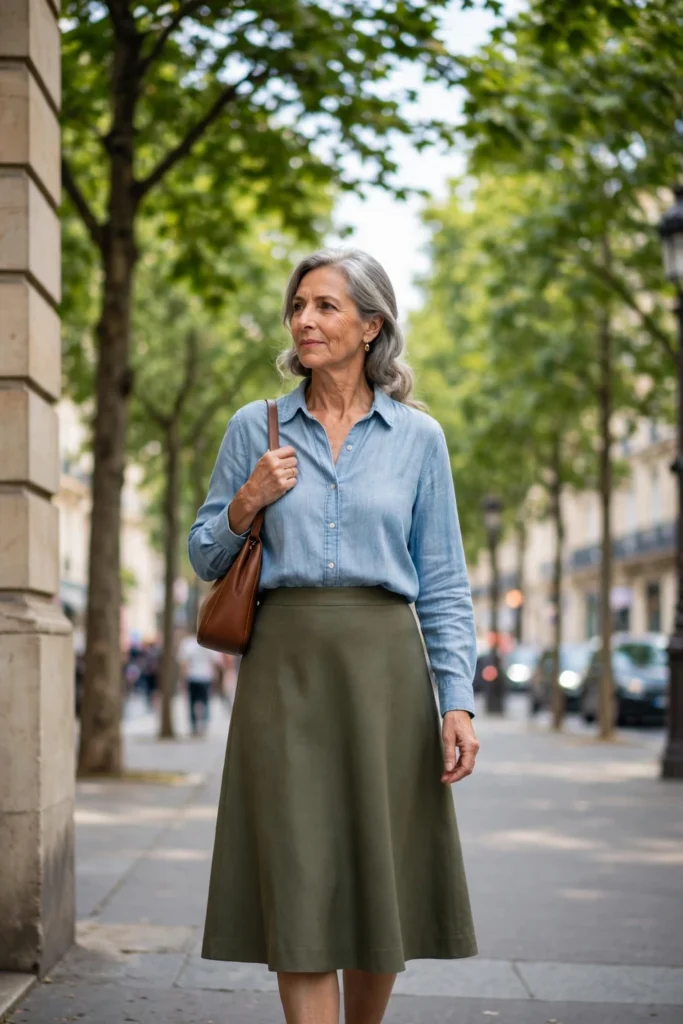
The best midi skirt isn’t the dressiest one — it’s the one that moves well, sits comfortably, and works with the tops and shoes you already own.
A gentle A-line is often the easiest starting point: room through hip and thigh without excess volume. A bias cut can look graceful as long as it skims rather than clings. Pleats work beautifully when the fabric is soft and the waistband lies flat.
Here’s a quick fit-and-fabric guide for choosing wisely.
| Skirt Style or Fabric | What to Look For | Why It Works |
|---|---|---|
| Gentle A-line midi | Smooth waistband, soft flare, mid- to lower-calf length | Moves beautifully without overwhelming your frame |
| Bias-cut satin or crepe | Skims the hips, never pulls across the stomach | Draws a graceful line with simple tops |
| Pleated midi | Fine pleats, flat waistband, fluid fabric | Polished, never stiff |
| Knit midi | Medium-weight knit — never thin or clingy | Comfortable for everyday wear after 50 |
| Denim midi | Straight or softly A-line, front slit for movement | Feels modern with loafers, boots, or clean sneakers |
Fabric note
Thin fabric shows every line and wrinkle — elegant turns exposed fast. A medium-weight fabric hangs better and forgives more.
Color matters too. Black, navy, olive, camel, chocolate, ivory, and soft denim shades are endlessly repeatable. Prints can be lovely, but a small print or soft contrast is easier to style than a loud oversized pattern.
Pair Your Midi With Tops That Add Shape
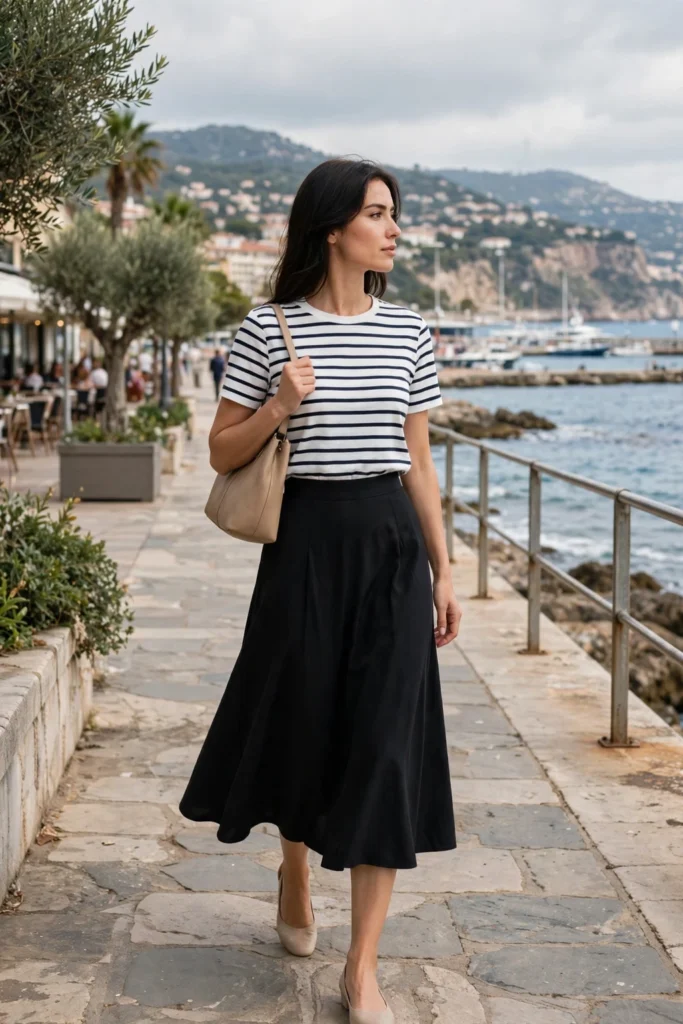
The top decides whether your midi skirt reads elegant, casual, or confused.
For a clean look, balance volume with shape: if the skirt has movement, keep the top more controlled; if the skirt is straight, the top can be softer and more relaxed.
A fine knit sweater is one of the easiest choices — polished enough for lunch, errands, travel, or a casual dinner, never stiff.
A button-down shirt works beautifully too, as long as the fabric drapes and the front is tucked or knotted neatly at the waist.
On warmer days, a structured tee beats a thin, limp one. Choose a neckline that opens up the face — a relaxed crewneck, a soft V-neck, or a boatneck.
Color note
For a longer line, keep top and skirt close in color. A navy knit with a navy skirt, or an ivory top with a beige skirt, looks elegant without trying too hard.
See how one midi skirt shifts across real-life plans:
| Occasion | Top Choice | Finishing Piece |
|---|---|---|
| Errands or casual lunch | Soft tee or fine knit | Denim jacket or light cardigan |
| Dinner out | Draped blouse or silky shell | Cropped blazer or wrap |
| Work or meeting | Crisp button-down or knit polo | Structured jacket |
| Travel day | Lightweight sweater | Long cardigan + slim shoes |
| Weekend gathering | Simple tank or tee | Linen shirt, worn open |
Small details matter: a pushed-up sleeve, a clean neckline, or a neat tuck makes simple outfits feel far more intentional.
Get the Hemline and the Shoes Right
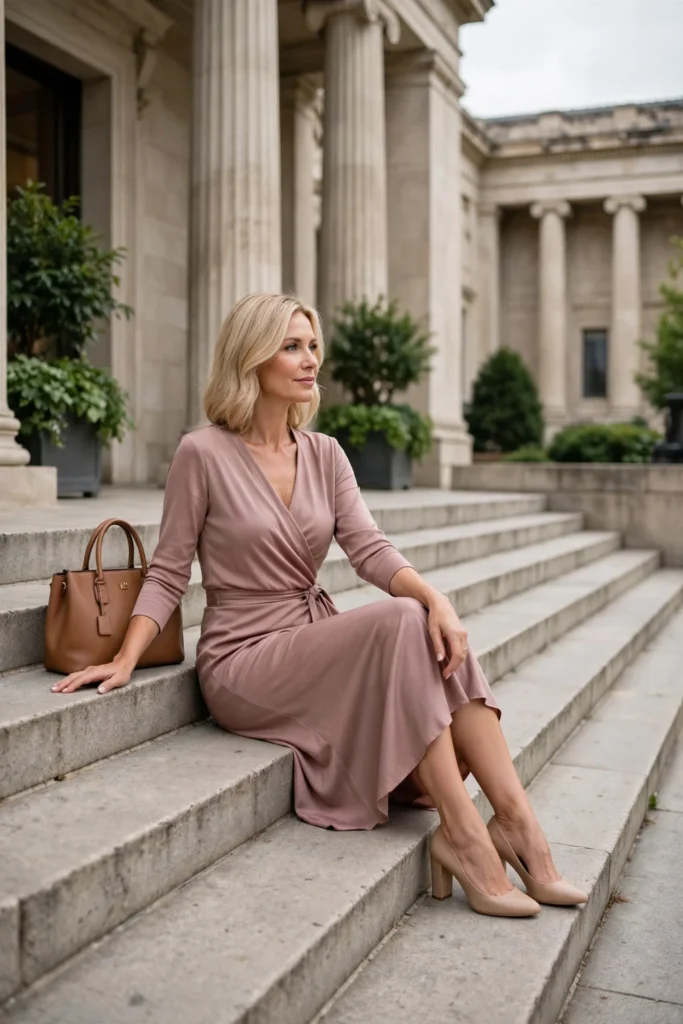
Shoes can make or break a midi skirt — the hemline pulls every eye to the lower leg.
A just-below-the-knee hem feels classic. Mid-calf gets tricky when the shoe cuts across the ankle. Lower-calf often feels most elegant, leaving a clean line between hem and shoe.
That doesn’t mean you need heels — just shoes that keep the leg line open.
Pointed flats, slingbacks, low block heels, refined sandals, loafers, and sleek ankle boots all work beautifully. Chunky shoes can work too, but they need balancing with a cleaner top or jacket.
Shoe swap
If your midi feels heavy with ankle-strap sandals, switch to a pointed flat or low-vamp shoe — more visible foot makes the whole outfit look lighter.
For cold weather, choose boots that meet the hem or slide beneath it. A gap between skirt and boot can work, but the proportions must look deliberate. When in doubt, a tall boot under a midi skirt draws one smooth, elegant line.
What to Avoid — and Why
Midi skirts don’t need strict rules — but a few common pairings make them harder to wear.
Treat these as gentle checks, not restrictions.
If something feels off, don’t blame your body — check the proportions first.
The fix is usually small: change the shoe, tuck the top, swap the cardigan, or shift where the skirt sits on your waist.
A Simple Midi Formula Worth Copying

The formula: soft A-line midi skirt + fine knit top + pointed flats or low block heels + cropped jacket.
This formula works because it gives you shape at the waist, movement through the skirt, and a clean finish at the shoe — polished, never fussy.
Go more casual with a denim midi and loafers. Dress it up with a satin skirt, soft blouse, and slingbacks. Warm it up with tall boots and a cropped wool jacket.
After 50, a repeatable formula beats chasing trends. Once you know your best skirt shape, top length, and shoe style, getting dressed gets dramatically easier.
Conclusion
Wearing midi skirts after 50 isn’t about strict fashion rules. It’s about learning the small details that make the skirt work for you: waistline, fabric, hem, shoe, and top length.
Midi Skirts After 50 — Your Questions Answered
Tap a question to reveal the answer.
Just below the knee or lower-calf are the safest bets — both leave a clean line between hem and shoe. Mid-calf can work too, but it needs the right shoe so the leg doesn’t look cut off.
At the natural waist whenever possible. A defined waistband gives the outfit its shape; a skirt sitting low on the hips tends to drag the whole look down.
Absolutely — pointed flats, loafers, and sleek sneakers all work. Just keep the leg line open: avoid heavy ankle straps with a mid-calf hem, and you’ll look long and light.
Keep the top simple and slightly fitted — a fine knit, a tucked button-down, or a neat tee. The pleats bring all the movement, so the top should stay calm.
Add tights, tall boots that slide under the hem, and a cropped wool jacket or fine-knit layers on top. A medium-weight fabric holds its shape better in cold weather than anything thin.