
For Women Over 50 Who Want to Feel Like Themselves Again | The Complete Style Guide
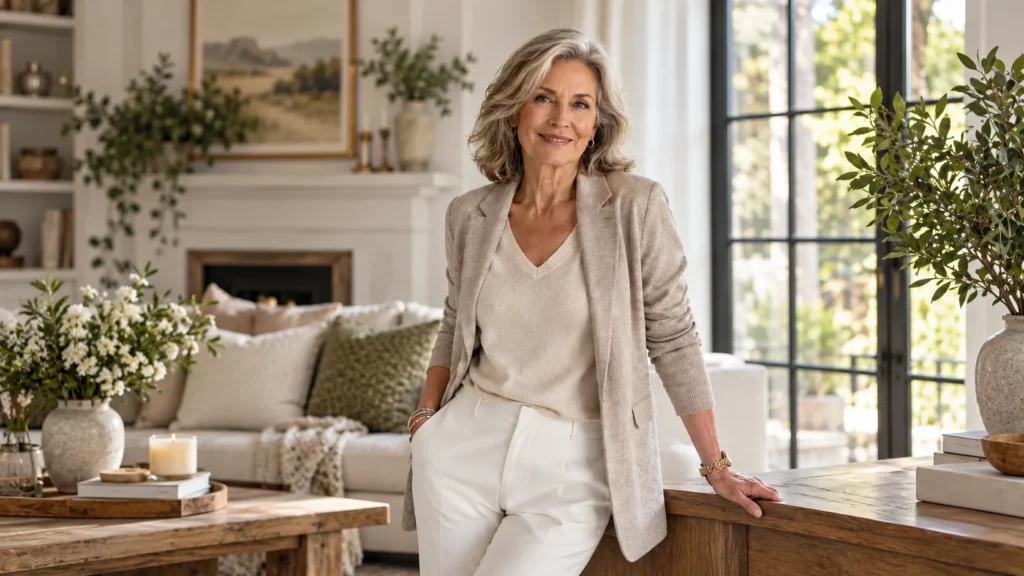
Getting dressed each morning can suddenly feel strangely unfamiliar, especially when the reliable staples you once reached for without thinking no longer look or feel quite right. Your aesthetic eye and personal taste have not disappeared, but natural shifts in body proportions, rapidly cycling retail trends, and a closet accumulated over decades can quickly make putting together even a basic outfit feel far harder than it needs to be.
That daily friction has a way of quietly eroding your self-assurance. Instead of opening your closet with excitement, you are met with second-guessing and hesitation, wondering why clothing choices that once felt effortless now seem awkward and out of sync with who you are today.
The confusion deepens because women over 50 are constantly handed conflicting, outdated advice. Mainstream fashion tells you to dress younger to stay visible, dress ultra-safe to stay “age-appropriate,” cover up changes, or discard everything for a completely new wardrobe—guidance that creates unnecessary expense, clutter, and guilt.
True style is never about reinventing yourself into someone else or concealing your stage of life. Creating polished, stylish outfits after 50 starts with aligning your wardrobe with your real daily routine, finding cuts that bring natural visual balance, and curating a tight rotation of reliable outfits you genuinely love wearing with confidence.
Your Style Isn’t Gone—You Just Need a Fresh Place to Start
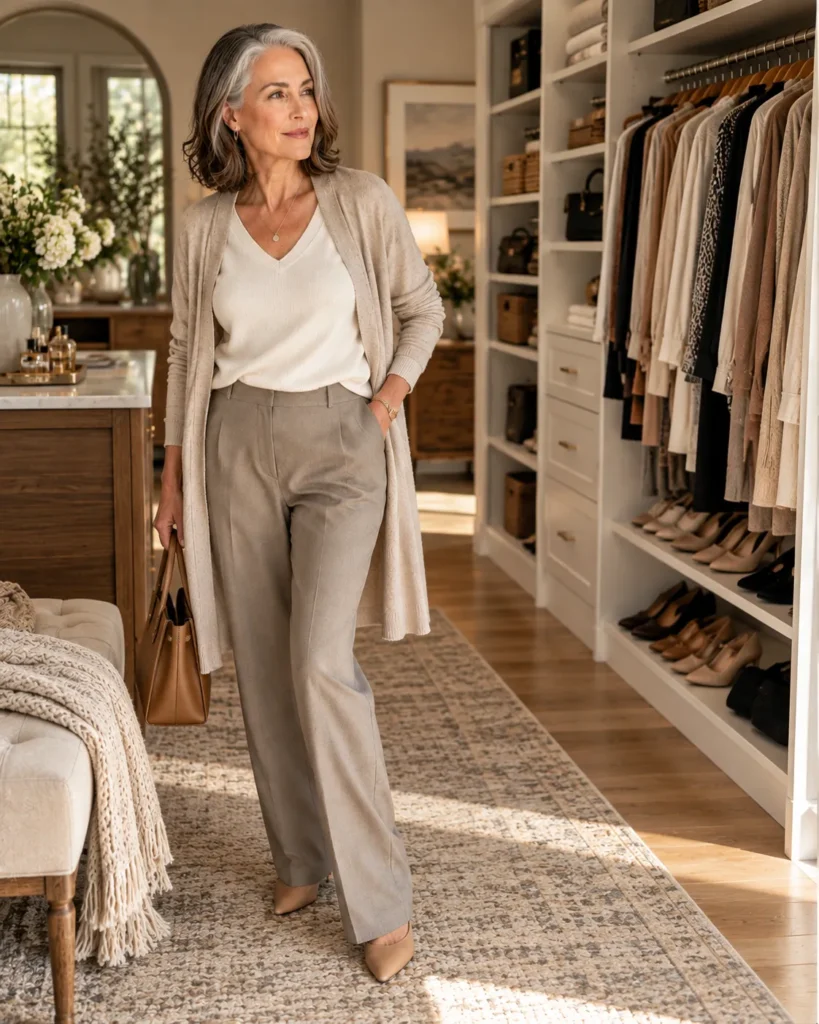
Most women never suddenly lose their natural sense of style or eye for good taste. What actually fades away is that dependable, effortless foundation that once made choosing an outfit feel second nature every single morning.
A go-to pair of jeans might simply drape or sit differently on your body today. Footwear you previously walked in all day long may no longer align with your physical comfort or daily routine, while a classic tailored blazer might still zip or button up, yet feel far too formal and restrictive for the relaxed lifestyle you actually lead now.
Fashion trends also shift in quiet, subtle ways over time. You certainly do not have to adopt every passing craze, but gradual changes in pant leg silhouettes, jacket lengths, modern shoe shapes, and simple layering methods can make a trusted, long-standing outfit formula feel slightly dated or out of balance.
The real aim here is never to blindly chase seasonal fashion. Instead, it is about thoughtfully rebuilding your own signature aesthetic around garments that truly honor your evolving body, prioritize genuine comfort, reflect your authentic personality, and match the real demands of your daily schedule.
That entire transition becomes infinitely smoother and more rewarding the moment rigid, outdated fashion rules are swapped out for far more practical, empowering questions.
You have full permission to hold onto every single piece that still genuinely feels like you. A meaningful personal style refresh always works best when it feels like thoughtful editing, never erasing who you are.
Begin With What Truly Suits Your Current Lifestyle
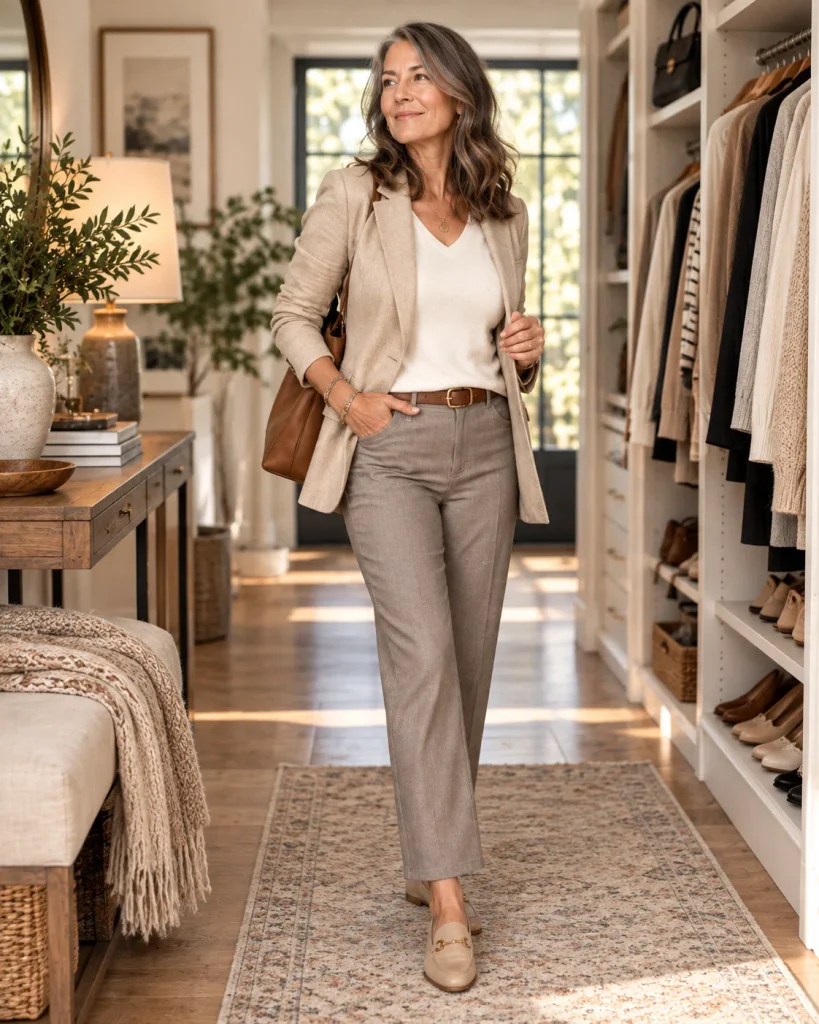
Before buying anything new, take an honest look at the clothes you actually reach for during a normal week. The most useful wardrobe is rarely the fantasy wardrobe you wish you wore.
If most of your days involve running errands, casual lunches, working comfortably from home, appointments, travel, or quality time with family, those real situations should shape your closet. Ten formal occasion dresses will not solve a daily morning dressing problem if what you really need is an easy, comfortable pair of trousers.
Pay close attention to how your clothes feel after two or three continuous hours. Waistbands that dig in, jackets that require constant fussy adjusting, and shoes that only work while sitting down are simply unlikely to become dependable wardrobe basics.
FIT NOTE: Completely ignore the numerical size printed on the tag when deciding what looks good. What truly matters is where the shoulder seam sits, how the fabric falls gracefully from the hip, where the trouser breaks, and whether you can move naturally without restriction.
A garment can fit beautifully without being skin-tight. In fact, a little controlled, intentional ease often creates a far cleaner silhouette because the fabric hangs smoothly rather than clings.
This is truly one of the most useful mindset shifts in dressing over 50: stop asking, “Can I still pull this off?” and start asking, “Does this piece genuinely work for my life now?”
Craft a Personal Uniform You Can Count On
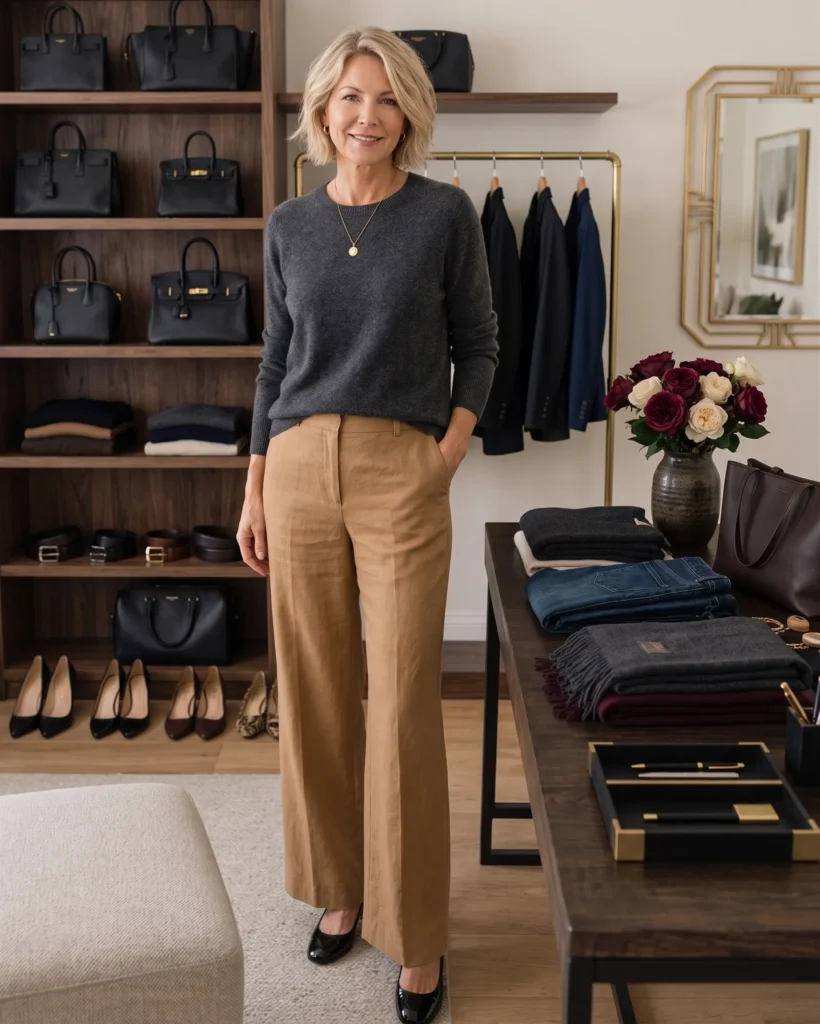
Having a personal uniform doesn’t mean putting on identical clothes daily. It means settling on a go-to mix of cuts and styles that you already know look good on you, which takes most of the early-morning decision-making off your plate.
Maybe your recipe is straight-leg denim, a cozy sweater, and loafers. Someone else might feel most like herself in wide-leg pants, a neatly tucked blouse, and crisp white sneakers.
Start by paying attention to the outfits that already leave you feeling polished.
Keep an eye out for:
- one pair of pants or jeans in a cut you feel sure about
- two or three tops that go well with that cut
- one handy extra layer, like a blazer, cardigan, shirt-jacket, or light jacket
- two comfy pairs of shoes that give the look a different vibe
- one understated final touch, like earrings, a belt, a scarf, or a structured handbag
With that foundation set, a few simple swaps will give you endless variety.
Below are some easy outfit combinations that suit everyday life.
| Occasion | Outfit Combination | Why It Works |
|---|---|---|
| Everyday Errands | Straight-leg jeans, a cozy knit top, and minimalist sneakers | Relaxed staples and a balanced silhouette create a comfortable yet thoughtfully styled everyday outfit. |
| Lunch with Friends | Wide-leg trousers, a close-fitting knit, and classic loafers | A fitted upper half balances the wider trouser shape, giving the outfit a cohesive and flattering appearance. |
| Smart-Casual Day | Dark denim, a polished blouse, and an easy-fit blazer | Defined shoulders add structure to the outfit, making casual denim look more sophisticated and put-together. |
| Travel Day | Pull-on pants, a basic tee, a soft cardigan, and cushioned sneakers | Comfortable materials and versatile layers make movement easy while maintaining a neat, casual appearance. |
| Casual Evening | A midi-length skirt, a lightweight knit, and ankle boots | Keeping the top simple creates balance and allows the skirt’s shape to become the main focus. |
These outfit formulas serve as flexible inspiration, not strict rules to follow. Adjust the colors, necklines, shoes, or layers to create a look that reflects your personal style.
Focus on Fit, Fabric, and Balance Instead of Chasing Trends
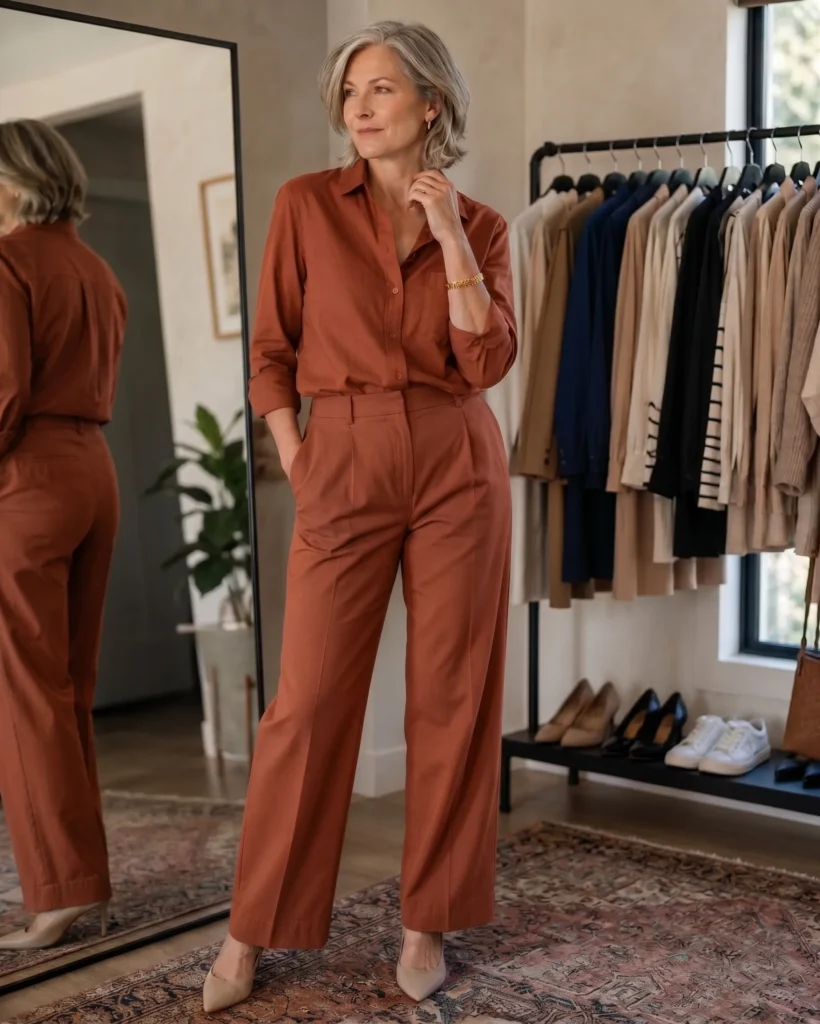
Many outfits that seem incomplete do not necessarily need a trendy addition. Often, a few adjustments to the proportions can make the entire look feel more balanced.
When wearing loose-fitting trousers, try pairing them with a top that adds definition around the shoulders or waist. If you enjoy longer, relaxed shirts, straighter or slimmer trousers can prevent the overall outfit from looking too bulky.
Small styling details can also make a noticeable difference without buying anything new. A subtle front tuck, rolled sleeves, an open neckline, a cropped jacket, or a glimpse of the wrist can instantly improve the outfit’s visual balance.
Fabric choice is equally important.
Lightweight jersey may cling to areas you prefer to keep understated, while overly structured materials can add unnecessary bulk. Fabrics with enough weight and drape to fall smoothly often help simple outfits for women over 50 look more polished and thoughtfully styled.
Use the following fabric guide to make more confident choices when shopping.
| Fabric or Garment | What to Choose and Why |
|---|---|
| T-shirts | Choose cotton or cotton-blend fabrics with a medium weight that gently follow the body without clinging. |
| Knitwear | Look for fine or medium-gauge knits that provide enough structure to maintain their shape. |
| Trousers | Select materials with a smooth drape and a touch of stretch for easier movement and a neater silhouette. |
| Shirts | Opt for cotton blends, linen blends, or soft woven materials that tuck in smoothly without creating extra bulk. |
| Jackets | Choose lightly structured shoulders and a comfortable fit that leaves sufficient space for layering underneath. |
Fabric Tip: A higher price tag doesn’t always guarantee better quality. Hold the garment up, feel the material between your fingers, and check how well it regains its original shape.
A well-chosen piece should feel comfortable and look good whether you’re standing, sitting, walking, or going about your daily routine.
Incorporate Modern Touches for an Effortlessly Natural Look
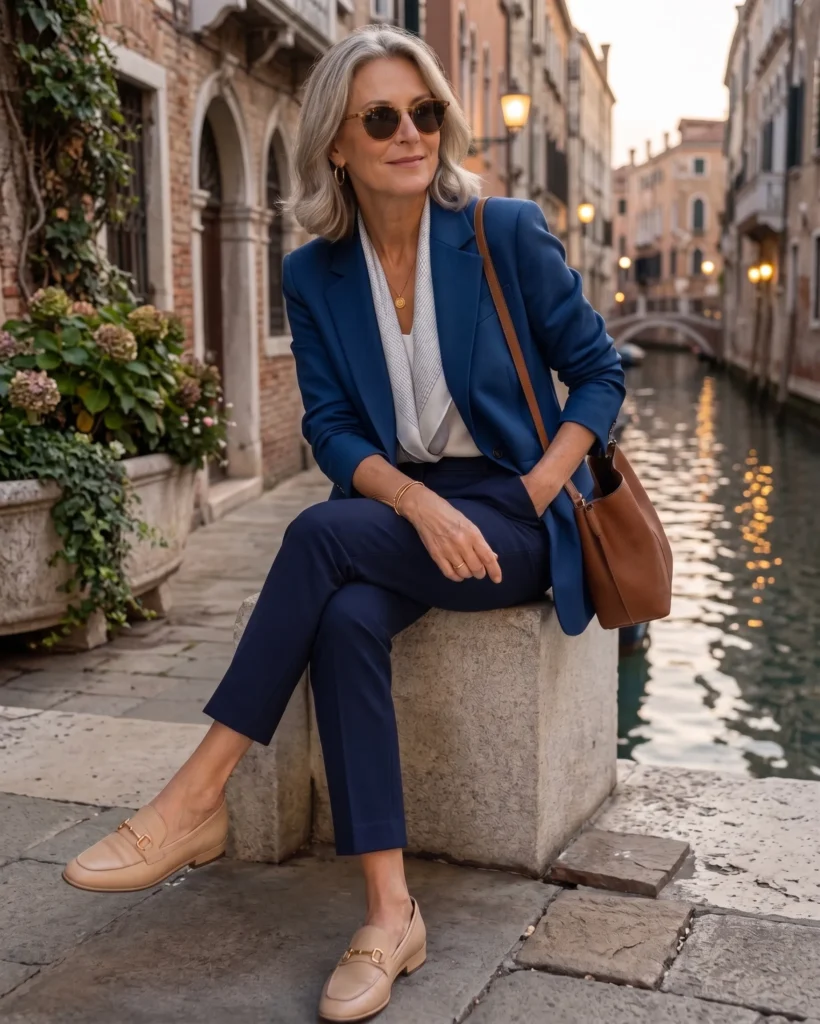
Staying stylish doesn’t mean replacing your entire wardrobe whenever a new season arrives. Often, a single updated silhouette or carefully chosen accessory is all it takes to give familiar pieces a fresh, contemporary feel.
Pairing wider-leg trousers with a favorite knit can instantly transform an outfit’s overall appearance. You can also refresh your look by replacing overly delicate, outdated footwear with modern loafers, sleek sneakers, simple ankle boots, or comfortable low block heels.
Pay attention to these little styling adjustments:
– Choose a More Contemporary Trouser Shape. Straight-leg, softly wide, tapered, and relaxed trousers can all look flattering when balanced with the rest of your outfit.
– Refresh Your Jacket’s Silhouette. A relaxed blazer, shorter jacket, or clean hip-length layer can create a more modern appearance than an excessively fitted style.
– Keep Accessories Simple and Intentional. A statement pair of earrings or a structured handbag can add personality without overwhelming the overall look.
– Introduce Color Near Your Face. A favorite shade in a sweater, scarf, blouse, or jacket can give basic trousers an entirely new appearance.
– Switch Your Shoes for an Instant Update. Footwear can significantly influence whether an outfit feels casual, refined, sporty, or dated.
You don’t have to embrace every passing trend. Instead, select the details that complement your personal style and make your existing wardrobe more versatile and enjoyable to wear.
That is the difference between following fashion and developing style confidence over 50.
Refresh Your Wardrobe Thoughtfully Without Feeling Overwhelmed
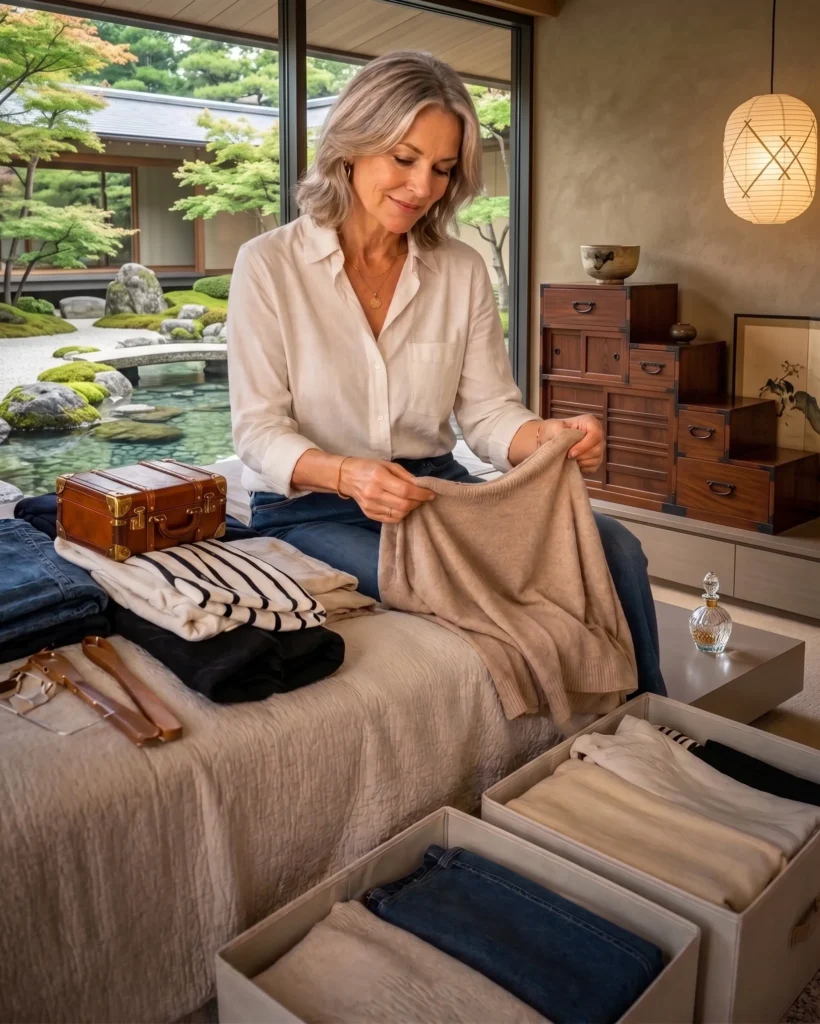
Cleaning out your closet can sometimes feel surprisingly personal. Clothing often holds memories, past versions of ourselves, money we’ve invested, changes in body size, and styles we may still feel connected to.
You don’t have to discard everything simply because your fashion preferences are evolving. Begin by sorting your clothes according to how useful they are rather than labeling them as right or wrong.
Hold on to the pieces that feel comfortable and make you happy when you wear them. If certain items have sentimental value, store them separately so you can keep those memories without relying on them for everyday outfits.
Next, consider the garments that are almost right.
A jacket made from beautiful fabric but featuring sleeves that are too long might only need a simple alteration. Similarly, trousers that seem outdated with one pair of shoes may look entirely different when styled with another.
Budget-Friendly Tip: Before purchasing a replacement, experiment by pairing the garment with three different items from your wardrobe. A different shoe, tuck, sleeve adjustment, belt, or layering piece might improve the look without costing anything.
When shopping for new clothing, consider how often you’ll wear an item instead of focusing only on the excitement of buying it. Trousers worn twice a week may offer more everyday value than a statement dress reserved for a single occasion.
A thoughtfully coordinated, smaller wardrobe can provide far more outfit possibilities than an overcrowded closet filled with pieces that don’t complement one another.
A well-coordinated, compact wardrobe often offers more outfit options than an overcrowded closet filled with mismatched pieces.
One Simple Step to Get Started Today
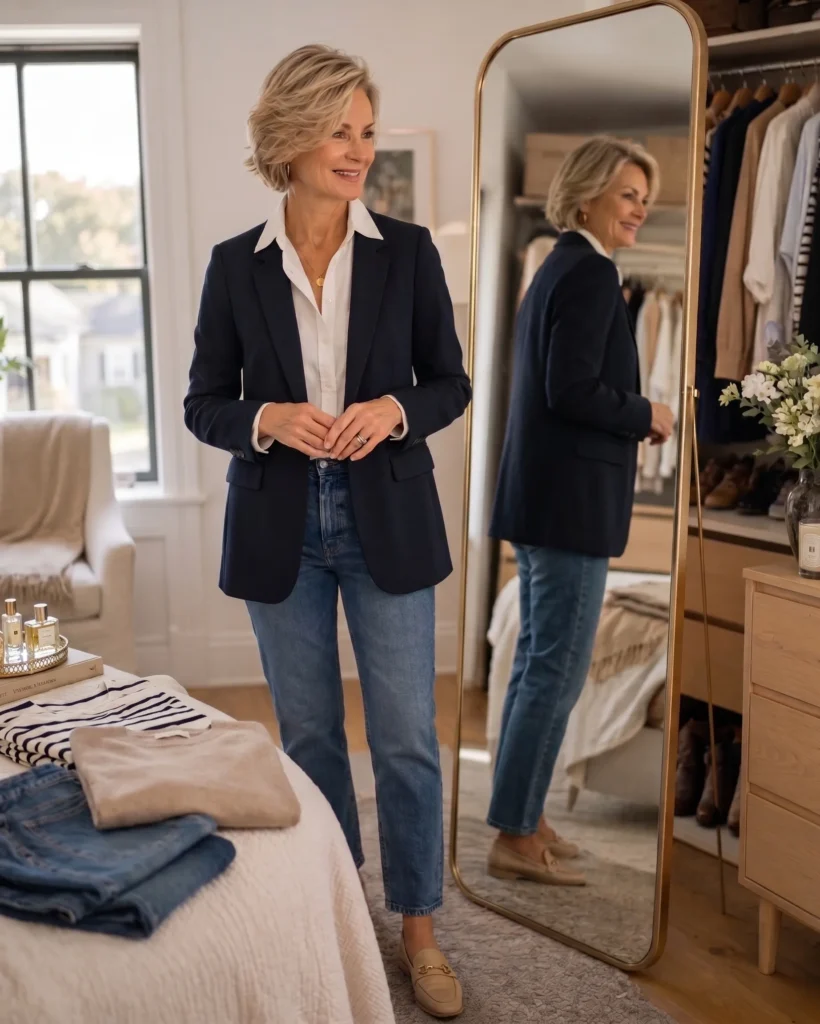
You don’t have to figure out your complete personal style in a single afternoon. Instead, begin with one outfit that represents the version of yourself you’d like to express more often.
Start with a pair of trousers or jeans you already feel good wearing, then choose a top that complements their shape. Add a comfortable pair of shoes and one thoughtful detail to complete the look.
Formula: favorite trousers or jeans + simple top + practical third layer + comfortable modern footwear
Before changing, take a quick picture of the outfit. Clothes can appear surprisingly different in photographs, and comparing several looks side by side can help you recognize patterns more clearly.
You might discover that you repeatedly prefer open necklines, cropped jackets, monochromatic dressing, wide-leg trousers, structured handbags, or particular shoe styles. These preferences can become the foundation of your own personal style formula.
The most successful everyday outfits for women over 50 often come from repeating the combinations that work while making small changes that keep your wardrobe feeling fresh and interesting.
Frequently Asked Questions
The Timeless Style Edit
Tap any card to reveal the answer.